



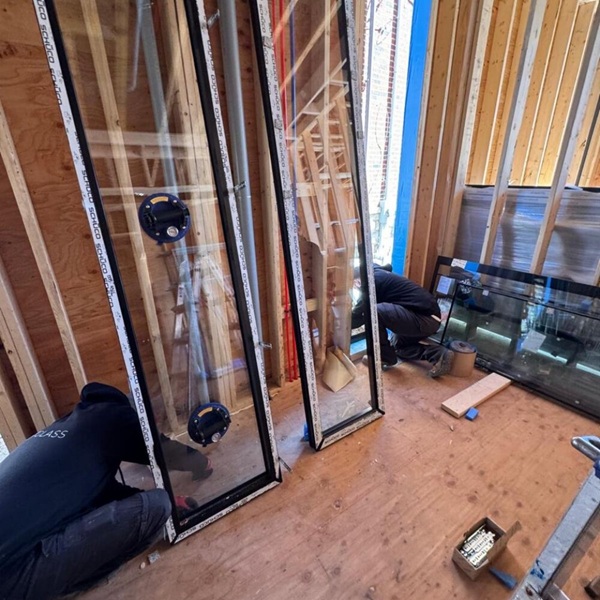
Calling windows a glass-and-metal sandwich is an understatement of the role they play in making any space more breathable, livable, and productive. Not to mention how they instantly enhance the aesthetics of any space – especially if you bring your vision to life with custom windows.
That said, when it comes to planning and executing a project – whether a residential high-rise or a modern corporate structure – contractors still wonder whether to opt for traditional windows or custom ones.
HaloGlass, a reputed and trusted name in the world of windows in Ontario, is here to demonstrate the difference between the two and why custom windows might actually be a better idea for hotels, commercial towers, residential buildings, and mixed-use properties.
How Are Custom Windows Different From Traditional Windows?
Custom window systems differ from traditional ones in several aspects. In fact, your choice among the two can have a direct impact on the entire structure’s compliance, installation efficiency, durability, glazing continuity, and long-term operational costs.
Here is a detailed breakdown of how custom windows outperform traditional windows in all of these spheres.
-
Fit and structural integration
When it comes to traditional windows, you are stuck with preset module sizes. There is no scope for modifications, which means your space is forced to adjust to its dimensions instead of the other way round.
This can be a problem in high-rise construction projects as their mullion spacing and slab edge tolerances tend to vary. So if you use traditional windows, you will have to settle and make compromises in terms of filler profiles, gapping, shims, and interfaces.
Custom windows break the rigidity of their traditional counterparts by being built-to-size for your project. Matching its exact dimensions, mullion spacing, sightline requirements, and slab edge offsets, they offer better air seals and a cleaner facade. They also speed up the installation process and require minimal corrective adjustments.
-
Performance and thermal envelope
Traditional windows do the bare minimum when it comes to thermal performance and energy efficiency. Meeting basic CSA codes, they do not provide the kind of optimum comfort custom window systems can.
The latter can be engineered to be fully code-compliant. Builders have the flexibility to specify glazing thickness, thermal break design, type of LoE coating, type of glass fill, and different acoustic glass combinations. This helps in the creation of systems that offer every kind of convenience and comfort windows can provide – from reduced sound transfer to improved energy consumption.
If your project requires energy credits or sustainability scores or has an ESG target to meet, custom windows can help you check all of these boxes. With every specification met, you truly get off-the-catalogue windows that are exclusive in every sense of the term.
-
Aesthetic continuity and design outcome
Preset modules of traditional windows are repetitive and can make every building look the same. However, custom window systems offer you the flexibility to design them any way you want. You can opt for slimmer frames, oversized glass, larger spans, and uninterrupted sightlines to maximize views while maintaining a clean and sophisticated aesthetic that preserves the design integrity of your build.
-
Noise, comfort, and urban livability
In downtown Toronto, noise reduction is actually a critical performance metric for windows. Naturally, traditional models with their limited acoustic glazing profile can only take you so far.
For spaces that demand noise control, such as hotels, student housing, senior housing, and rental REITS, you need the acoustic benefits custom windows provide. Their laminated acoustic stacks, glass panels of variable thickness, and cavity depth options strike the right balance between noise reduction and comfort preservation.
-
Lifecycle and value maintenance
Let’s talk cost and maintenance. Traditional windows might be cheaper upfront but their maintenance costs are high. Frequent resealing, retrofitting, premature failures, and poor energy performance can add up over time. That is not the case with custom window systems. With their correct hardware, superb sealing systems, and impressive thermal package, customers get windows that last long and don’t cost an arm and a leg to maintain.
Conclusion
Traditional windows were a good option some time ago. Ontario’s commercial and residential projects now demand a system that offers energy-efficient performance without sacrificing comfort. HaloGlass provides state-of-the-art custom window systems ideal for high-rises and commercial projects across Canada. Contact us to elevate the comfort and aesthetics of your build.
FAQs: Custom Windows
Do custom windows take more time to produce?
Is installing custom windows complicated?
Are custom windows more expensive than traditional ones?