




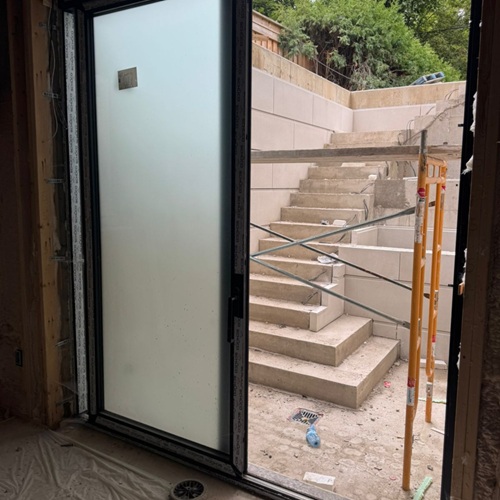
A common part of mid-rise homes, high-rise balconies, and mansion patios, sliding door systems have become a residential essential. Their primary purpose is to connect interior spaces with outdoor living areas, which means at least one side of them is constantly exposed to the elements.
Therefore, as an integral part of a building’s exterior envelope, they must provide reliable protection against snow, rain, heat, and wind. Contractors and builders who are planning to install sliding doors in their project should opt for systems that offer adequate weatherproofing properties.
HaloGlass’ collection of high-quality aluminum door systems is built to withstand the Ontario climate. In today’s blog, we will tell you why having a weatherproof door system matters and how it can be achieved to provide enhanced interior protection.
Why Is Weatherproofing Sliding Doors Essential
Over the course of their lifetime, sliding doors will be constantly exposed to the elements. If proper weatherproofing techniques are not resorted to, the buildings they are a part of are likely to suffer from:
- Water infiltration during heavy rains
- Air leakage and reduced occupant comfort
- Poor thermal performance
- Moisture-related damage along the interior frame
- Increased maintenance and repair costs
Appropriately weatherproofed and well-designed sliding doors do not cause these issues – especially if they have been installed correctly. They ensure smooth operation and energy efficiency while protecting the interior of the building.
Steps To Weatherproofing Sliding Glass Doors
Not all sliding doors come with weatherproofing features built-in. It is the responsibility of contractors to ensure the final door system is capable of safeguarding the interiors of a building against the effects of the weather. Here’s how to do exactly that:
-
Choose the right door system
Builders must choose aluminum systems that support weatherproofing. Features such as thermally broken aluminum frames, multi-point sealing systems around panels, high-quality glazing, and durable gaskets and seals keep water and heat out while improving thermal efficiency and indoor comfort.
-
Evaluate its threshold design
The threshold design of a sliding glass door plays a critical role in improving its resistance to external elements. When selecting doors, contractors must take their project’s requirements into account before narrowing down to any one of the following options –
- Standard thresholds
- Low-profile thresholds
- Drainage-integrated thresholds
Each serves a different purpose. For example, standard thresholds offer the best weather resistance, while low-profile thresholds improve accessibility. As for drainage-integrated options, they are best for exposed locations and support optimized water management.
-
Integrate flashing and waterproof mechanisms
Instead of treating sliding doors as a standalone option, builders must integrate them into the building’s weather barrier to enhance their weather protection capabilities. For example, ensuring proper flashing around the door’s rough openings keeps water away from its walls. On the other hand, waterproof membrane integration at the sill prevents water from seeping in. Correct sealing of the perimeter joints and continuous air and water barrier connections prevents air leaks and water seepage.
-
Ensure proper drainage
Drainage is the next piece of the puzzle that must be taken care of. Well-sealed sliding door systems are adept at managing water exposure. Their basic design features clearly demarcated drainage paths, which must remain unobstructed during and after installation. They also come with weep holes and slightly sloping exterior surfaces to prevent water from pooling along their thresholds and sills. Their intelligent design reduces the risk of water infiltration, thereby ensuring long-term protection against moisture damage.
-
Install accurately
The fact of the matter is that installation is critical for weather performance. Poorly installed doors almost certainly suffer from air leaks and water infiltration. That is why, before installation begins, builders must make sure that the frames are perfectly level and aligned with the opening. The door should be able to operate smoothly without binding. Furthermore, there should be consistent gaps around operable panels, and the weather seals should be uniformly compressed.
Conclusion
For exterior sliding doors, weatherproofing is essential and an unskippable part of their design and installation process. However, by selecting high-performance doors with appropriate threshold designs and ensuring proper installations, contractors can guarantee lasting weatherproofing effects without sacrificing comfort or quality.
As for where such energy-efficient systems can be found, the answer is with us. HaloGlass’ aluminum door systems feature a weatherproof design specifically tailored to the Ontario climate. Contact us to get reliable, high-quality door systems that keep the weather out while optimizing indoor comfort.
FAQs
Can sliding door systems be involved in coastal homes?
Do larger-sized sliding doors require different weatherproofing strategies?
How often should the weather seals of a sliding door be inspected?