



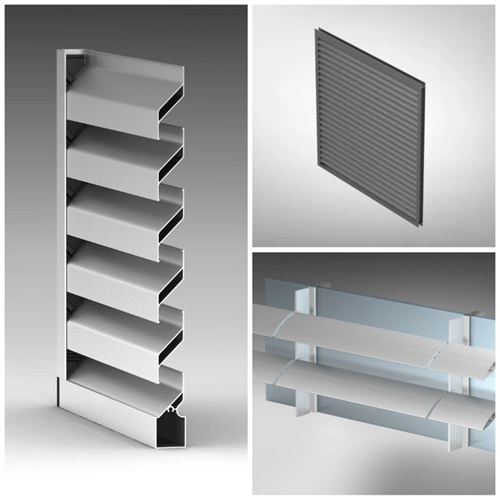
The facades of modern buildings are getting increasingly complex and architecturally detailed in order to stand out. But making a statement is not enough. They still need to be backed by fully functional systems that support proper airflow while protecting their interiors, and that includes a combination of well-planned curtain walls, aluminum windows, and aluminum ventilation louvres.
Aluminum ventilation louvres provide greater control over airflow, thereby optimizing indoor comfort while preventing the entry of rain, debris, and other outdoor elements. However, proper installation is key to reaping their benefits, and that’s where a deeper understanding of these systems can help.
In today’s blog, HaloGlass – suppliers of modern aluminum doors, windows, and more in Toronto, will explain how ventilation louvres work so you can specify the right solution for your project.
What Are Aluminum Ventilation Louvres & Why Are They Important?
Aluminum ventilation louvres feature an assembly of angled blades to support airflow. They are typically installed within the exterior walls, curtain walls, or facade systems of a building’s envelope. Their primary purpose is to shield interior spaces and structures from weather exposure without compromising airflow.
Modern ventilation louvre systems balance performance with aesthetics, providing multiple benefits that prove the pivotal role they play in high-rises.
Properly installed ventilation louvres help in:
- Promoting controlled airflow
- Safeguarding spaces with HVAC systems and mechanical units
- Preventing rainwater infiltration
- Reducing debris build-up in the louvres
- Supporting the appearance of a clean and well-maintained facade system
Ventilation louvres are instrumental to improving both occupant comfort and the operational efficiency of the buildings they are a part of.
Common Types Of Aluminum Ventilation Louvres
There are three major types of aluminum ventilation louvres every contractor must know about. Each of them has a different design and purpose, so knowing about them is essential to ensuring the final choice fits the project they are intended for:
- Drainable louvres: Designed to channel rainwater away from the building, drainable louvres are commonly found in locations that are likely to receive wind-driven rain.
- Fixed louvres: Featuring stationary blades for continuous ventilation, fixed louvres still manage to keep the weather’s worst elements out. They are a common fixture in mechanical rooms and service areas.
- Architectural louvres: Meant to be visually appealing, architectural louvres complement the look and feel of modern facades while enabling optimal airflow. They are commonly paired with curtain walls or windows to ensure proper ventilation.
The right choice among them depends entirely on a project’s specifications and architectural demands.
Aluminum Louvres Applications In Modern Construction
Corrosion-resistant and lightweight in nature, aluminum ventilation louvres offer unparalleled design flexibility while being low maintenance. This makes them the perfect choice for a host of building types, which include:
- Commercial buildings: High-rises containing multiple offices often install louvres in their mechanical and server rooms to maintain proper ventilation and a consistent external appearance.
- Mixed-use buildings: In mixed-use developments, aluminum louvres offer a practical way to maintain airflow without sticking out like a sore thumb.
- High-rise residential developments: Louvres are installed to complement the unique and attractive facades of high-rises while ensuring adequate ventilation on all floors.
- Institutional facilities: Blending seamlessly into the basic infrastructure of schools, hospitals, public buildings, etc., louvres optimize indoor comfort and contribute to energy savings.
How Aluminum Louvres Integrate With Modern Facades
One of the biggest advantages of using aluminum ventilation louvres is that they are capable of integrating with nearly every other facade system out there, contributing to a seamless external appearance while enhancing building performance.
Here is a list of facade systems that they can be coordinated and paired with:
- Curtain wall systems
- Aluminum windows
- Architectural cladding
- Exterior aluminum door assemblies
Early coordination with other structural components preserves the architectural cohesiveness of a building while achieving its ventilation goals.
Conclusion
Aluminum ventilation louvres are one of those quiet, nearly unnoticeable components of a building that make all the difference to its overall performance and airflow. Not only do they protect the building’s envelope from debris and the effects of the weather, but they also offer enough design and integration flexibility to blend seamlessly into a building’s facade.
Looking for durable and easy-to-maintain ventilation louvres? We can help you. HaloGlass’ range of ventilation louvres delivers high performance in all weathers, serving as the right choice for all kinds of Toronto projects – from fancy high-rises to public buildings. Contact us to get the right ventilation system for your project.
FAQs
Can aluminum ventilation louvres be color-matched to a building’s external facade?
Do ventilation louvers reduce HVAC system efficiency?
Can ventilation louvers be installed in retrofit projects?