



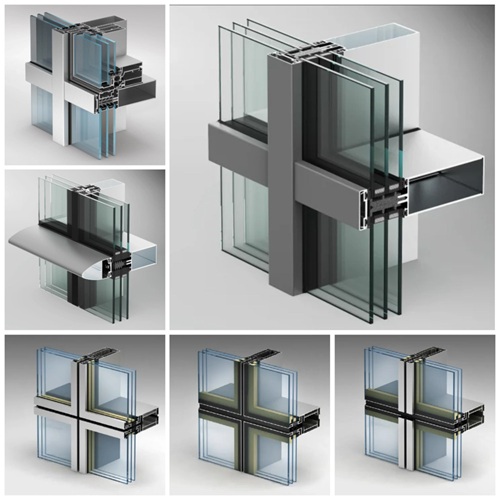
A curtain wall system is not just a glass facade. They are a mix of durability and performance that get their sleek appearance thanks to several carefully engineered systems that quietly work in the background.
A dependable fusion of structural, thermal, and weatherproof components, the different parts of a curtain wall system come together to protect the building they are a part of while simultaneously enhancing its curb appeal.
At HaloGlass, the leading supplier of aluminum facade systems in Toronto, we believe contractors and builders must familiarize themselves with a curtain wall system’s core components. This ensures proper installation, coordination among different trades, and the long-term performance of the entire structure.
What Are The Must-Know Components Of A Curtain Wall System?
From mullions to gaskets, there are a lot of visible and invisible elements that are necessary for the successful installation of a curtain wall system. Let us tell you all about their must-know components.
Mullions: The Backbone of The System
The vertical frame that upholds a curtain wall system is known as a mullion. Not only are they the primary members of the entire structure, but they are also responsible for transferring loads from the glazing and facade to the building’s structural frame. This ensures the overall weight of the frame is supported, preventing movement or loose bits over time.
Depending on the requirements of a particular project, mullions are specifically engineered to resist a wide variety of forces. These include:
- Wind loads
- Building movement
- Dead loads
- Thermal expansion and contraction
Builders should exercise caution when selecting mullions for high-rise projects as their structural requirements are much greater than those of mid-rise developments.
Transoms: Connecting Everything
Right next to vertical mullions are horizontal framing members. These are known as transoms, and their job is to keep everything together. Transoms help in:
- Supporting glazing panels
- Distributing structural loads
- Maintaining the system’s geometry
- Accommodating draining pathways
Transoms and mullions together form the framework of a curtain wall system.
Glazing Units: The Main Facade
When gazing upon curtain walls from the outside, the first thing people notice is its glass panels. However, just about any other glass panel does not make the cut. Curtain wall glazing systems are specified as per their:
- Thermal insulation
- Solar control
- Acoustic performance
- Safety and security
- Daylighting requirements
Furthermore, the glazing’s size, thickness, and type also play a role in determining the structural design of a curtain wall system.
Pressure Plates & Power Caps: Maximizing Durability
Pressure plates keep the glazing secure, holding it firmly in place to ensure weather-resistant performance in the long run. They also distribute pressure evenly across the glazing. As for power caps, they enhance the visual appeal of the whole structure by covering pressure plates.
Gaskets & Weather Seals: Weather Protectors
Curtain walls need high-performing seals to keep the building’s envelope protected. That is where gaskets and weather seals come in. They prevent air leakage and resist water infiltration to ensure nature’s elements do not ruin the interiors of the building. They also act as tiny shock absorbers, absorbing the impact of minor movement between the system’s various components.
Thermal Breaks: Comfort Optimizers
The aluminum frames of modern curtain wall systems often feature thermal breaks to reduce heat transfer and keep interior environments as comfortable as possible. They also improve the energy efficiency of a building and reduce condensation, making them a must-have component for curtain walls instead of a nice-to-have.
Anchors & Brackets: For Secure Connections
Finally, anchors and brackets serve a major purpose too. Not only do they transfer structural loads safely, but they also maintain a curtain wall system’s alignment and support installation tolerances.
Conclusion
Every single component of a curtain wall system serves a specific purpose that contributes to its performance and longevity. That is why builders and contractors need to partner with a reliable supplier. This prevents them from ending up with incomplete or poorly performing curtain wall systems.
HaloGlass provides precision-engineered curtain wall systems, complementary aluminum windows, and aluminum doors to builders and contractors all across Toronto. Our excellently crafted, complete systems are perfect for modern high-rises. Contact us to get durable and lasting curtain walls.
FAQs
How can curtain wall systems be protected from corrosion?
Do curtain wall systems use the same framing dimensions?
Can curtain wall systems be used for buildings with curved or irregular facades?